




 242 330

TRAVEL
242
January14
Towns on the way offer their own
proud differences. Melide, as an
example, claims to serve Spain’s best
octopus, so we indulged at a cosy
pulperia
where men hauled our lunch
from simmering vats, sliced the tentacles
with shears, piled them on wooden
platters and served them with olive oil,
salt, bread and deep saucers of red
wine.
Delicioso!
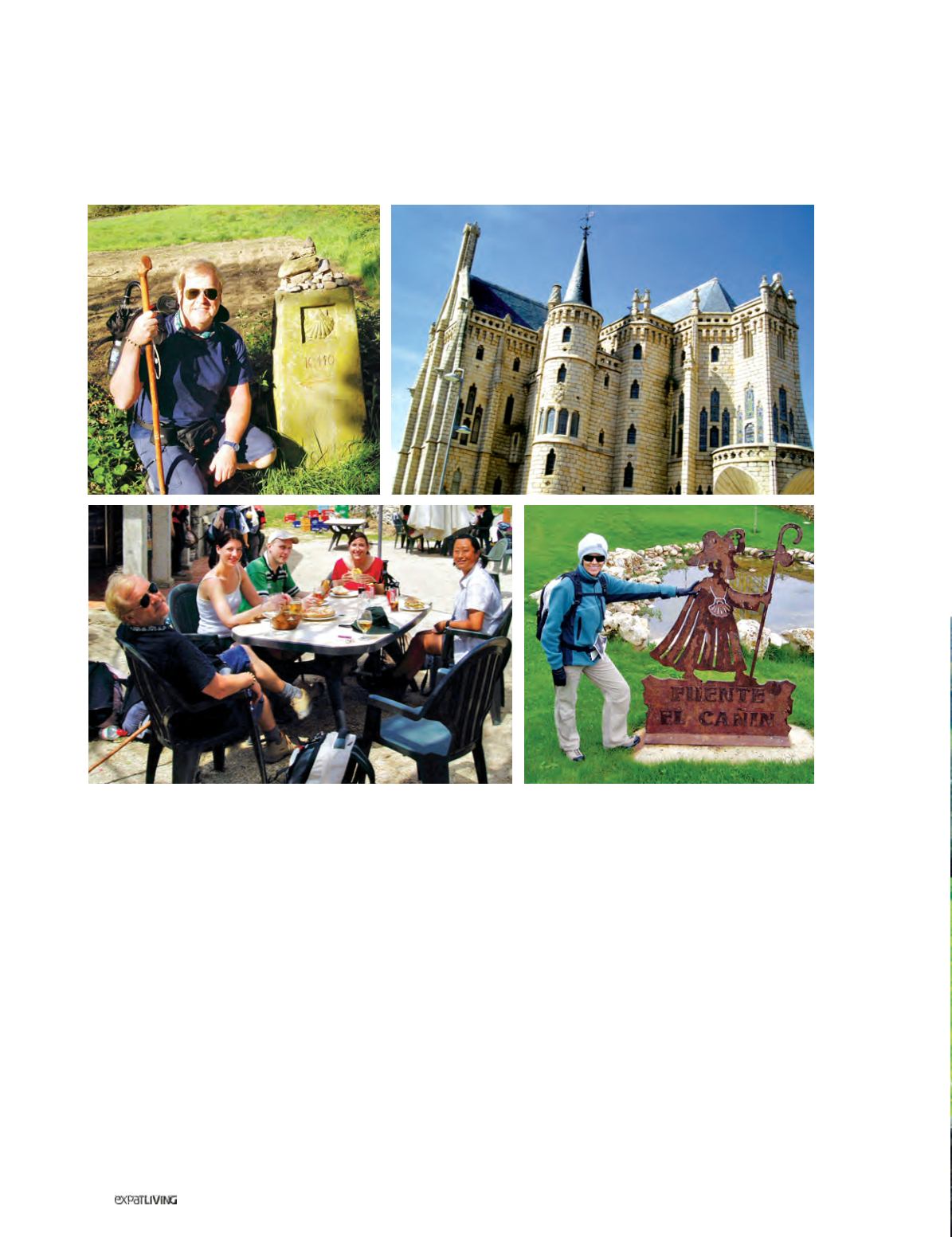
On and on. Always looking for the
scallop shell symbol or yellow arrows
daubed on barn walls, rocks or trees.
Sometimes missing those signs, getting
lost, backtracking, picking up the trail
again, counting down the kilometres
etched into stone waymarks.
All too soon the end drew near, and a
moving experience awaited us on arrival
at our destination, Santiago.
Every afternoon, a pilgrims’ mass is
held in the cathedral, a colossal baroque
pile that rivals the great churches of
Italy and France. Rebecca and I walked
in while that mass was underway.
Backpacks on, staffs in hand, tanned
and dusty, mission accomplished, we
felt we’d earned the majesty of the
occasion.
Seven priests with scallop shell
symbols prominent on their vestments
conducted the mass. A nun pierced the
soaring Romanesque interior with her
soprano lead, joined by an exuberant
response from the choir. Unique to this
cathedral, eight red-robedmonks hauled
a massive thurible – the
botafumeiro
–
swinging from a vaulted ceiling pulley
so it just cleared the heads of the
congregation in a mighty arc, spilling
incense smoke in its wake. Legend has
it this was originally installed to mask the
odour of hundreds of unwashed pilgrims.
After the mass, we stepped out into
dazzling Spanish sunlight and a festival
filling the plaza. Dancers wearing
caricature heads twirled for the crowd
as a brass band of old blokes in well-
worn tunics plunged through a medley
of local favourites.
Our next stop was the Camino
office where, after careful scrutiny
of our pilgrim passports, we were
given our Compostela certificates.
Thus registered, in Latin, our names,
origin and start-point were read out by
the priest at the next pilgrims’ mass,
together with the names of the 60 or
so who’d completed their Camino the
day before.