



 240 330

TRAVEL
240
January14
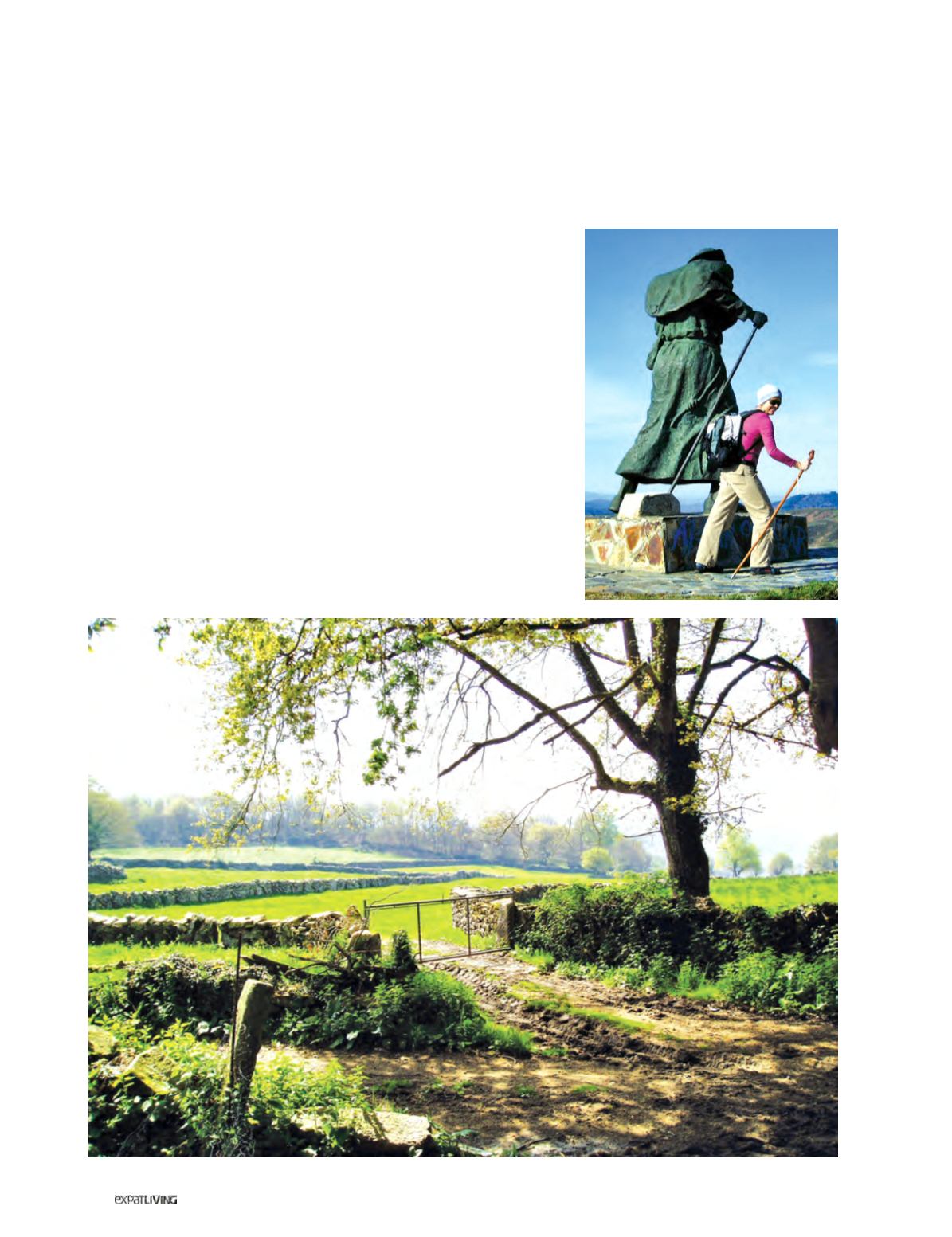
a misty cluster of stone and shingle
dwellings, the countryside of Galicia
opens to a patchwork of green valleys,
farms defined by dry stone walls and lines
of poplars, haystacks, jewelled streams
and time-warp hamlets, each with its
chapel, cemetery, slatted bins of drying
corncobs and, with luck, a tiny
taverna
serving jugs of wine and
bocadillos
(bread rolls) stuffed with
jamón
, the
smoky, dry-cured ham of Spain.
Locals along the way rarely speak
English, but smiles and gestures resolve
most situations. And though there’s real
camaraderie when you meet travellers
at
refugios
and
taverna
stops, for most
of the walk you’re quite alone; after
all, everyone is travelling in the same
direction and at similar speed, so
someone a kilometre or two ahead is
likely to keep that distance all day.
silent forests, rolling hills and steep
mountains.
After two days and 50km, our legs
stiffened whenever we took a break.
Climbing steps became a painful
challenge. And our boots were
threatening to cause blisters, so we
shrugged off the indignity of limping
around overnight villages in socks and
sandals. If you tackle the Camino, you
too may well don this fashion clanger.
After three or four days, things
changed. Yes, we were tired and our
backpacks pulled at our shoulders.
But gradually our legs found their
mojo. Gradually the walking became
effortless, with a feeling that this is
the way life should be: self-contained,
reduced to essentials, renewing.
Once over the mountain range
crowned with the village of O Cebreiro,