




 208 330

WINE&DINE
208
January14
A crash course on Japan’s big four.
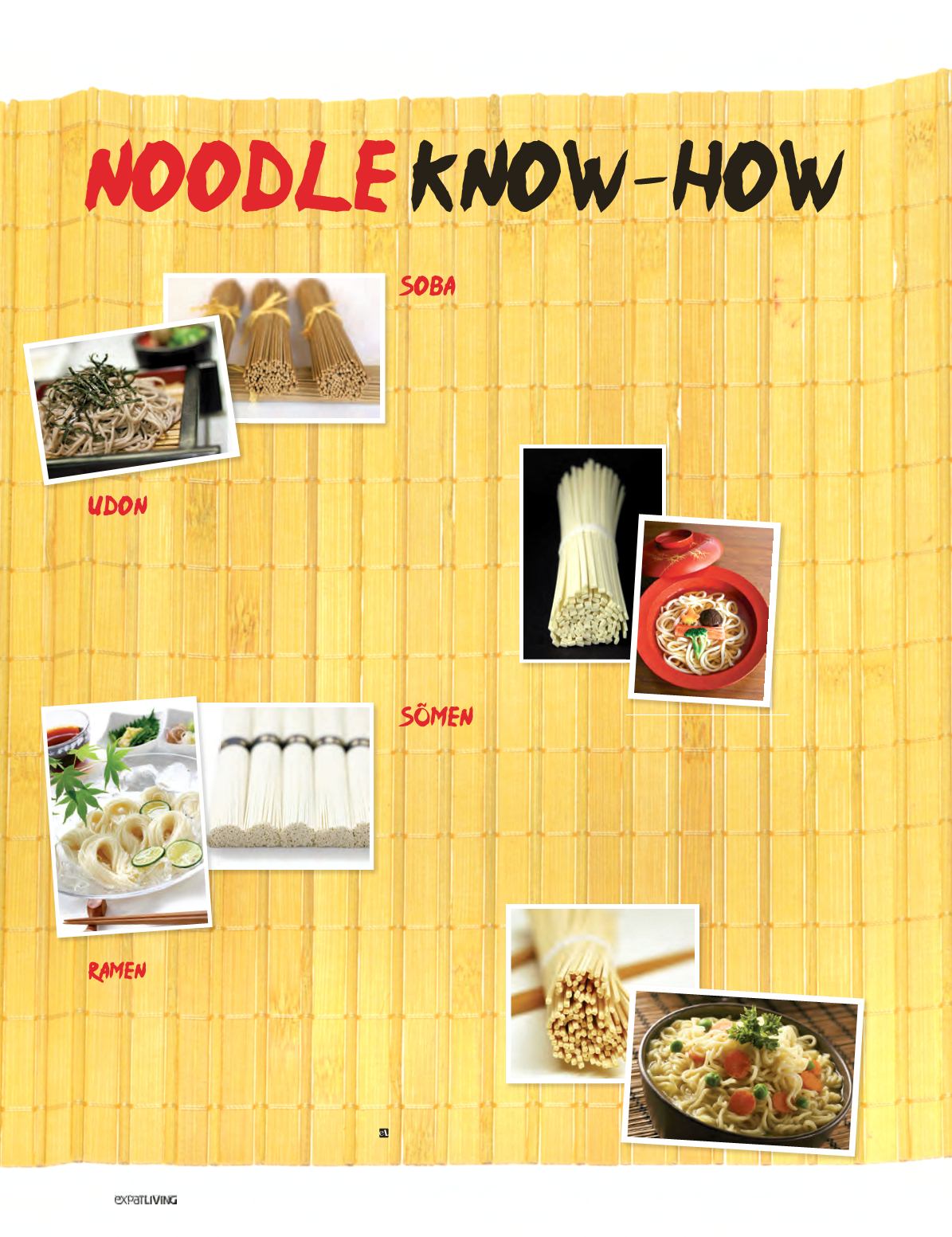
Translating as “buckwheat” in English, soba noodles are made
from a mix of buckwheat and wheat flour, though gluten-free,
100-percent buckwheat versions do exist. These light brown,
spaghetti-like noodles have a distinctive, nutty taste.
Try themat
: Shimbashi Soba (Paragon and Nex), which makes
fresh buckwheat flour daily from Tasmanian buckwheat seeds.
The thickness of these soft white noodles makes both the round and flat
varieties easily recognisable. Made of wheat, udon are best when made
fresh (rather than dried and reconstituted later). In eastern Japan, they
are commonly served hot in a dark soy sauce broth, while the west is
partial to a lighter soy broth.
Try themat
: Tamoya Udon, serving golden broth Sanuki udon straight
from the Kagawa prefecture; or Pan Pacific’s renowned Keyaki restaurant
(
shown here
)
Especially popular in the summer, somen are thin, white wheat
noodles, similar to vermicelli, that are often served cold (and
sometimes on ice). This noodle has its own ritual:
nagashi somen
,
or “flowing sõmen”, is a summer specialty where diners use
chopsticks to pluck fresh noodles from ice-cold water flowing
through a bamboo flume.
Try them at
: Skyve Wine Bistro where it’s served with pan-
seared tuna,
ebiko
and sesame
yuzu
dressing.
Perhaps the most popular of all, ramen noodles can be thick or thin,
straight or curly. Not to be confused with instant noodles or Chinese
noodles (though ramen are thought to have originated in China),
ramen noodles owe their yellowish colour and firm texture to kansui,
an alkaline mineral water ingredient.
Try them at
: Ippudo SG @ Mandarin Gallery for both original and
modern takes on
tonkotsu
ramen; or a spicy miso version by Iggy’s
Ignatius Chan at The Forum’s Uma Uma Ramen.