




 214 330

WINE&DINE
214
January14
BEATEBALDRY forages for exciting Asian ingredients readily available
in Singapore, to discover their traditional uses, health benefits and
ways to incorporate them into Western home cooking.
This month’s ingredient:
Water caltrop
(aliases:) buffalo nut, bat nut, devil pod, Chinese
horn nut, ling nut
What are
they?
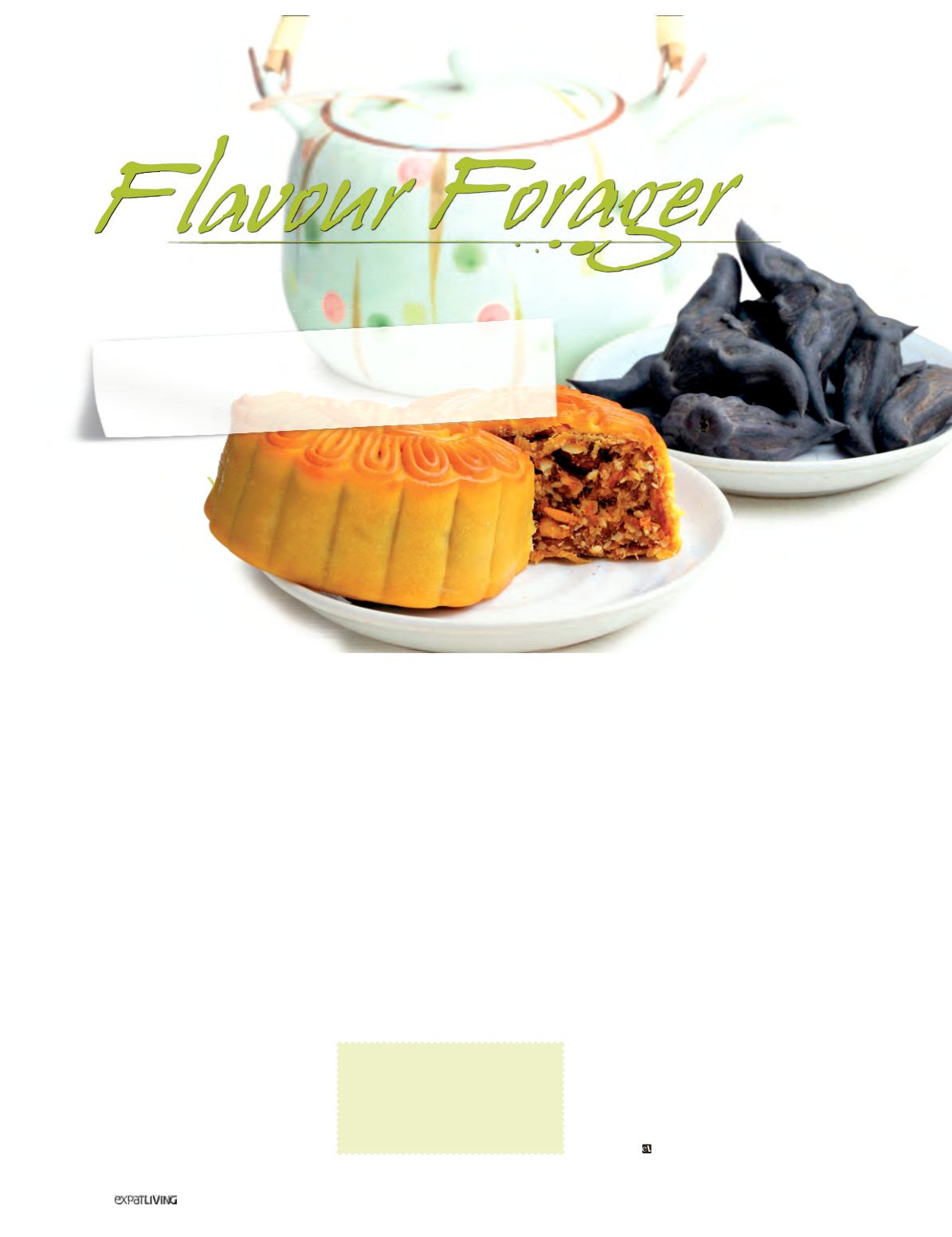
Water caltrops
are the small, black,
hard-shelled fruit of a
floating aquatic plant that
grows in fresh, warm, slow-
moving, water. Taiwan is currently
a big producer of water caltrops, but
they have traditionally been cultivated
in India and China for thousands of
years. In the United States and Australia,
however, the plant has become a pest.
Their nickname, buffalo nut, describes
the fruit’s striking resemblance to
buffalo horns, while the shell’s surface
has an eerie depiction of a face. Inside
the shell lies a cream-coloured, starchy
fruit. Although they are sometimes
called water chestnuts, they are not to
be confused with the crunchy Chinese
water chestnuts, which look and taste
completely different.
The flavour
Water caltrops cannot be eaten raw.
When boiled and cracked open, the mild
and starchy fruit tastes similar to roast
chestnuts or sweet potato, but less sweet.
Where do you find them?
In the fresh produce section of local
supermarkets such as FairPrice
Coronation Plaza or at wet markets
like Ghim Moh. Water caltrops are
commonly available in September and
October when the Chinese community
celebrates the Mid-Autumn Festival.
Uses
•
In China, street vendors sell water
caltrops steamed or boiled as a
healthy snack. They are also used as a
filling in pastries and, less commonly,
as prayer offerings.
•
In India, water caltrops are called
singhara
and are eaten boiled. They
are often dried and then ground
into a flour that is used in cooking,
particularly on Hindu fasting days, and
for religious rituals.
Health benefits
•
Ayurvedic texts indicate that water
caltrops can be used to increase
men’s fertility.
•
There is some reference in ancient
Chinese texts to water caltrops being
used to reduce fever.
Cook it at home
Water caltrops are easy enough to
cook – just put them into a large pot
of boiling water for 20 minutes, drain
them, crack them open and eat them.
However, as most of the fun is in their
hard-shelled inedible exterior, it would
be a shame to serve them up shelled
without their buffalo horns and demonic
faces. Along with their seasonality,
that’s probably why we couldn’t find any
references to recipes requiring them in
the ingredient list.
The gluten-free flour made from
grinding dried water caltrops is called
singhara
flour and can be used as a
substitute for wheat flour in a multitude
of recipes, from Indian
puri
to pancakes.
Idea?
Serve up a plate of these bad boys as
a dinner party opener. Get people to
guess what they are and how you eat
them. While we can’t guarantee your
guests will be licking their fingers, their
appearance alone should get chins
wagging!
Top tip
Don’t eat them raw! There’s a small
risk of fasciolopsiasis, an intestinal
disease caused by parasites often
found in aquatic plants.