




 301 330

REDUCING STRESS
Stress Trivia
1.
Stress has only been recognised recently as a
phenomenon. Scientist
Hans Selye
coined the term in
the 1940s, and here’s how he described it: “Stress, in
addition to being itself, was also the cause of itself, and
the result of itself.”
2.
Stress is one of the few English words to appear in
languages that don’t use a Romanised alphabet script.
3.
In Chinese the symbol is made of two characters, one for
opportunity and one for danger.
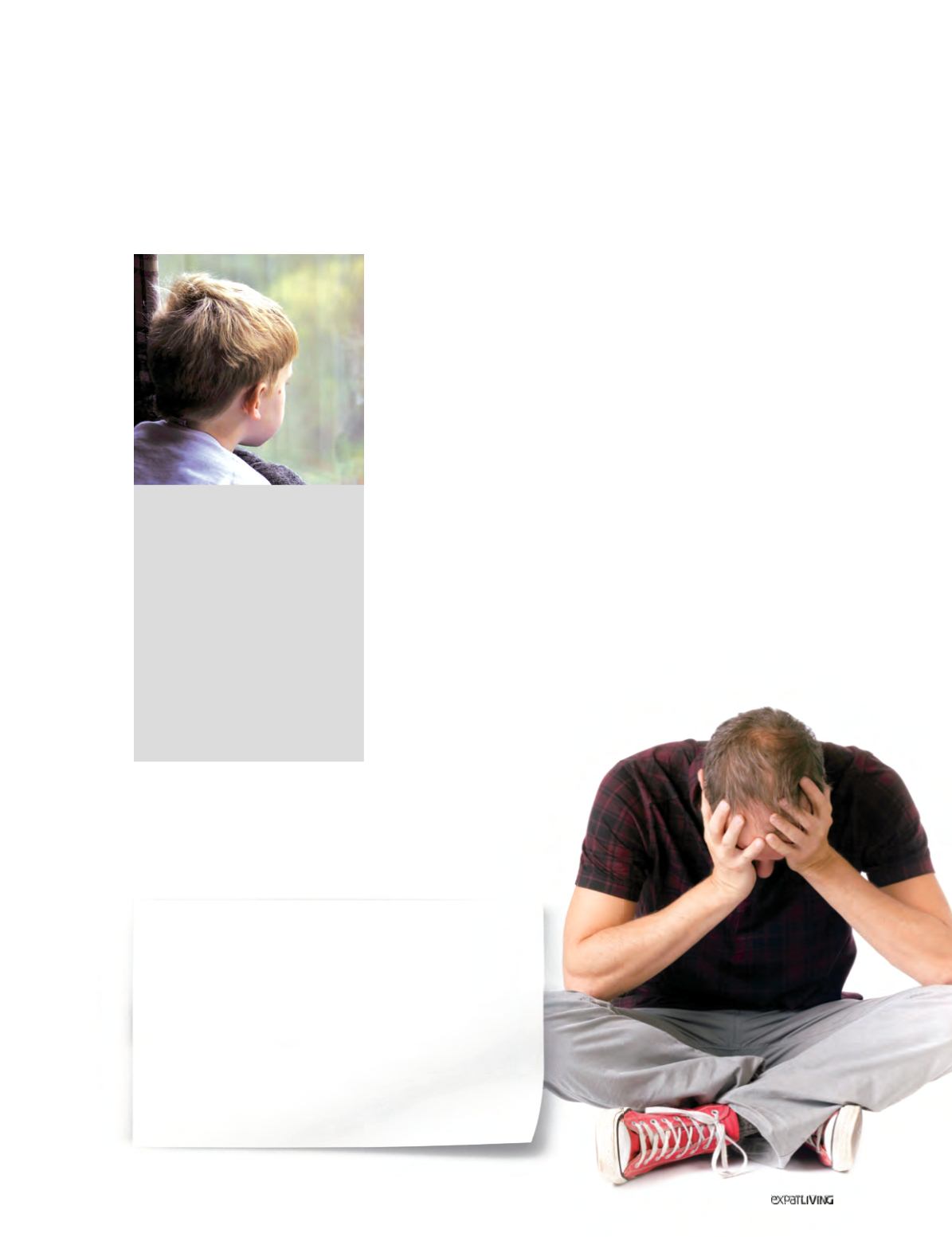
Stress and kids
Children find stress much harder
to articulate but demonstrate
behaviour similar to that of adults,
such as irritability, agitation,
worry and over-thinking. They
may also withdraw, experience
disturbed sleep, start wetting
the bed or appear anxious and
clingy. They may complain about
physical symptoms such as
stomachaches, headaches, loss
of appetite or nausea.
Children often experience academic
and social pressure, which can be
compounded by missing family and
friends. And, although Singapore is
very westernised and largely English-
speaking, there are still cultural
differences that, while interesting, can
be testing on occasions.
Boiling point
Jessica says alarm bells should ring
when you feel overwhelmed. “Symptoms
include preoccupation, a lack of focus
on the present, over-thinking and
worrying, mental exhaustion and a lack
of enjoyment of life, irritability and high
sensitivity to criticism. There may be a
focus on the negative and an inability
to enjoy activities that were previously
enjoyed. Other reasons for concern
include unhealthy coping behaviour
such as addictions, isolation, over-
eating or under-eating.
“People often place very high
expectations on themselves and, while
many expats are high achievers with
successful careers, their efforts can
be undermined by irrational negative
beliefs such as ‘I have to be perfect’, or
constantly trying to prove themselves
because of a deep-down insecurity.”
A qualified counsellor can help
identify stress triggers. “Making
changes in one’s life, or shifting
unhelpful beliefs and expectations,
can relieve stress and enable a
person to manage their life and
life pressures in a healthier way,”
she advises.
Jessica also suggests stress
mitigation techniques that can
start immediately:
Learn to relax and self-soothe. Deep
breathing exercises, visualisation,
meditation and exercise can all help.
Work on time management. Structure
your lifestyle into manageable chunks
and give yourself permission for
recreational activities and free time.
Let it go
Clinical hypnotherapist
Nancy Ho
,
from the
Regional Hypnosis Centre
,
believes the underlying factor behind
much of the stress that people
experience is fear. “Fear comes from
our thoughts, especially the ‘what
if’ thoughts. These thoughts create
negative emotions which trigger
subconscious thoughts,” she says.
As many of us know, our worries
and anxieties can be magnified a
thousand times by constantly rehashing
and replaying them in our mind –
sometimes consciously and sometimes
unconsciously – and it can become
overwhelming if this persists.
301
January14