




 230 330

TRAVEL
230
January14
Wehadn’tcheckedtheweather
report; so, pulling open the
curtains at 6am, the grey sky
and drizzle were a disappointment. In
the event of dreadful rain the company
has options, but we chose to rug up
and brave it, setting off in the hope that
the rain would hold off until we reached
Kaysersberg
, about 40km away.
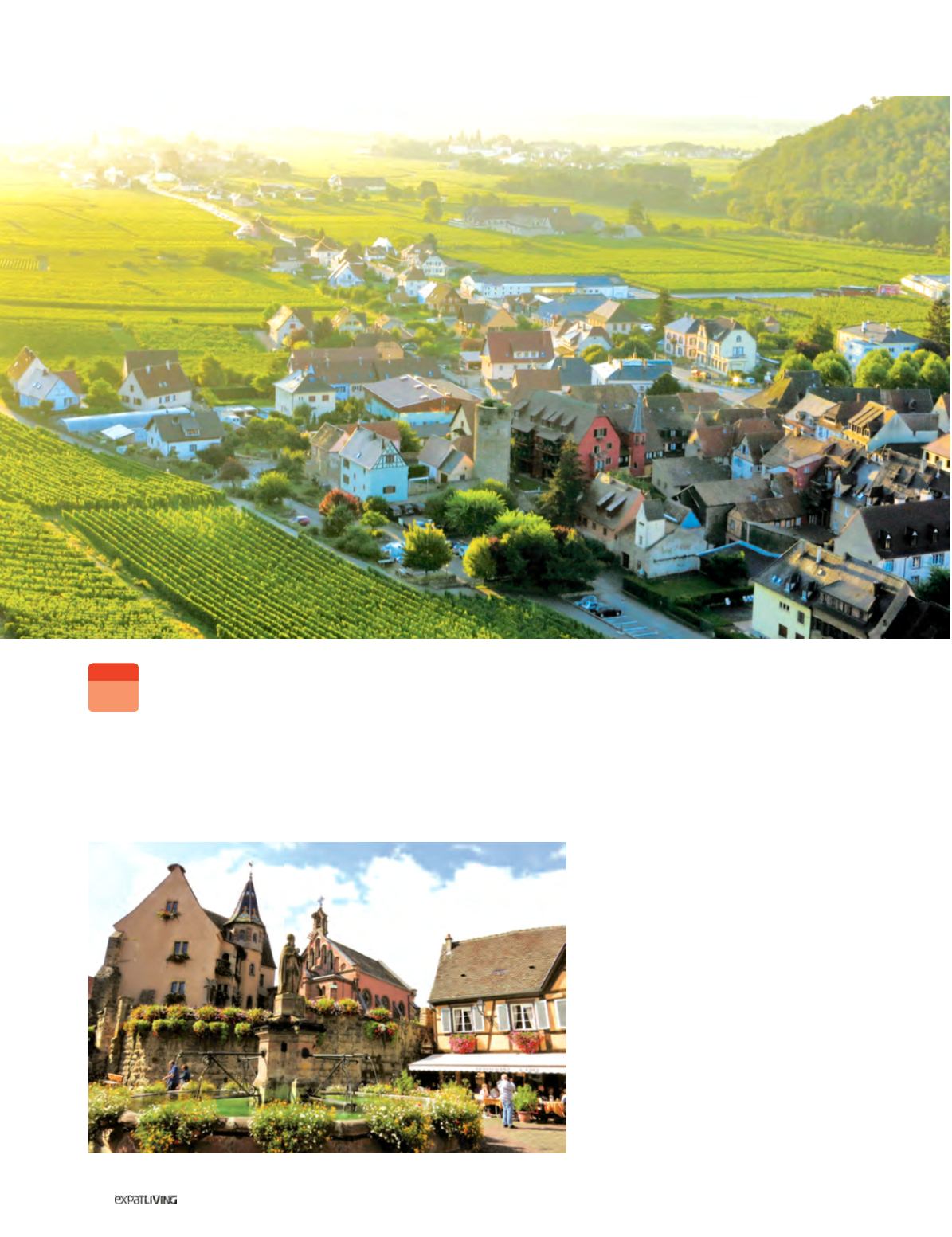
The day’s route wound through
vineyards, quiet back roads and at least
15 quaint and pretty villages and towns.
Each has a church, a
hôtel de ville
(town hall), a
patisserie
, a
charcuterie
,
water fountains, and lots of wine tasting
opportunities at doors labelled Vin
d’Alsace.
After covering 25km, we stopped for
lunch at a small café at quiet
Kintzheim
for the regional specialty of
tartes
flambées
(don’t call them pizzas). And
a half carafe of pinot blanc, which is the
most widely planted varietal in the region
after riesling.
It seems that only three or four towns
in the entire region are overrun with
tourists. After lunch we called into the
very pretty
Riquewihr
and, finding that
it was on the tour bus route, quickly
headed off again. But we had the
remaining dozen or so villages to
ourselves.
In almost every village in Alsace,
there’s a
stork’s nest
atop the town
gate. These migrating bird were once
endangered, but thanks to a concerted
local campaign they are back. The stork
is now an icon for regional souvenirs,
and there’s a
Reintroduction Centre
(cigogne-loutre.com) on the wine route
at
Hunawihr
.
We arrived in
Kaysersberg
about
5pm, with 52km on the odometer and a
bottle of pinot noir, purchased en route,
to enjoy in a hot bath at the comfortable
Hotel Rempart
.
DAY
3