



 63 330

ENTREPRENEURS
63
January14
East. We also have The Providore and
Underground Wines, giving buyers even
more incentive to visit the building.
This is not your average mall: it’s
more individualistic, and an interesting
location to showcase my products. We
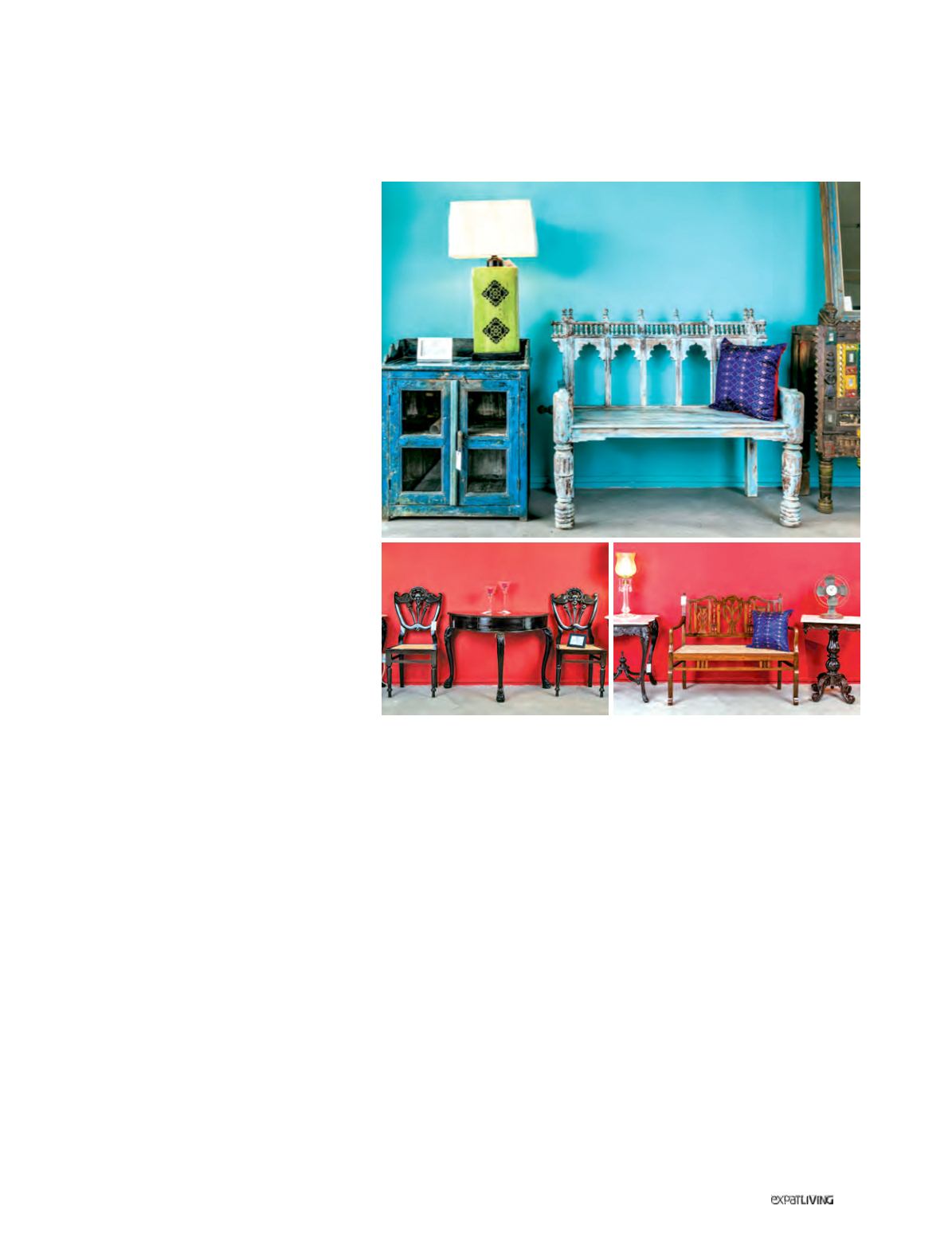
started with a bare slate: high ceilings
and a lot of space. We kept the neutral
flooring and added vibrant turquoise
and red accents. I find that the right
setting helps to introduce new ideas to
your clients – like how to use colour in
their own homes.
What makes your business
special?
Right now, we are focussing on two
particular lines of furniture. The first
is South Asian and Southeast Asian
colonial furniture. This is sourced from
India and Sri Lanka, and we’re also
looking at Indonesia. They’re special
because there’s a story behind each of
them; what’s more, the craftsmanship
they display is increasingly hard to find.
Each item is a piece of history you can
enjoy owning, and also pass down to
future generations.
Our second line is furniture made
from recycled or reclaimed wood. Old
painted doors and window frames, for
example, are transformed into items
that suit modern living spaces so well.
Their time-worn colour adds distinctive
beauty to a room.
Both of these lines express my feeling
that history has a place in our lives
and in our homes, even in the most
contemporary of settings. Each piece
is carefully handpicked for that purpose.
We’re smitten with the crane
design on your dinnerware. Tell
us about that.
We design and manufacture our own
dinnerware, and the black-necked crane
motif does indeed have an interesting
story. Some time ago, I was sketching in
Bhutan’s Phobjika Valley, and the people
told me I was lucky it was the season for
these special black-necked cranes, which
fly there every winter fromTibet. There’s a
16th-century monastery in the valley, and
local legend has it that the cranes circle
the monastery three times before they
come down to forage for food.
Though our home accent products
have European influences, they are all
from this region, and mainly inspired
by indigenous fauna and flora. We use
ikats (handwoven cloth) from Indonesia
and Cambodia for our soft furnishings,
working with local weavers and artisans
to create limited-edition designs.
How do you source your
furniture?
I pick each item personally. It helps
that my mom is a collector and that I’ve
developed my eye for quality over many
years. For the old colonial furniture, we
work with dealers; we’ll see the piece,
often in indescribably poor condition,
then work with restorers to return it to
good condition. For example, I found a
rosewood table with great stylistic details,
but first it needed to be stripped of the
oily pink paint that covered it.
In the store, we provide information
on the provenance and use of each old
piece. We also suggest ways of using it
in a contemporary setting. One client,
for example, uses what was originally
a dowry chest as a bar – the secret
jewellery drawer has become a hiding
place for a rare or special single malt.
What have you learnt from this
venture?
Entrepreneurship is very challenging,
but I’m blessed to have had help and
advice along the way. Though you
have to make your own decisions, it’s
important to keep your mind open and
listen to suggestions. In the end, friends
and family are all behind you and they
want you to succeed.
Artful House
315 Outram Road
#08-04 Tan Boon Liat Building
8112 6127 |
artful-house.com